
What to look for when buying a coffee machine
Author: AMT SerwisUpdated:
Thinking about replacing your coffee machine with a newer model? Or planning to buy your first one? Not sure which type will suit your home or business? Below you will find a few practical tips and suggestions on what to consider when choosing a coffee machine — they may well make the decision easier.
What to look for when buying a coffee machine
Deciding to buy a coffee machine is certainly not easy. But the fact that you have started thinking about it is undoubtedly the first step towards success and towards choosing exactly what you want. The text below is meant to help everyone looking to buy one, and may make it easier to pick the right machine for your own needs, those of your family, or of your colleagues if you are buying for an office.
The market today offers a huge range of coffee-making equipment. Shop shelves are groaning with options and prices run from a few hundred zloty to several tens of thousands. But does more expensive mean better? Choosing the right machine for your morning coffee means answering a few questions. How do you want the coffee to be made? Will the machine be used at home, or does it need to work as an office machine? How many people drink coffee at home or in the office, and how often? Does the coffee need to be ready quickly because time is short, or does that not matter much? And finally: are you a fan of plain black coffee, or do you prefer coffee drinks with frothed milk?
There is no doubt that coffee from a machine tastes better than instant or spooned coffee, and that our bodies take to it better. But depending on which machine you choose, the taste of the coffee it makes will vary. Based on how the coffee is prepared, there are three types of machine:
- filter coffee makers,
- pressure machines,
- combined pressure-and-filter machines, which bring together the methods of the two above.
Who is a filter coffee maker for?
The first of these, the filter coffee maker, is relatively cheap. Unfortunately the low purchase price goes hand in hand with the quality of the drink it produces. You could say the price of a filter machine is comparable to the quality of the coffee you get out of it — not especially high. These machines are simple in construction, with few components: usually a coffee holder, a jug the brewed coffee runs into, a filter, and a hotplate that keeps the coffee warm. Only a handful of models offer a convenience such as adjustable coffee strength. Generally the appliance delivers cups with a high caffeine content, because the contact between coffee and water lasts considerably longer than in an automatic pressure machine, for example. On top of that, if you enjoy a wonderful milky cappuccino or latte alongside a traditional black espresso, a filter coffee maker is definitely not for your kitchen, as it cannot froth milk. So who is it for, and what are its advantages? Despite a few drawbacks, filter machines have their supporters and are a fairly popular way of making coffee. They will certainly satisfy lovers of strong black coffee with plenty of caffeine. And, as mentioned, they are among the cheapest machines on the market, they are easy to use, and the volume they produce is enough to fill several cups in a matter of minutes.
Types of pressure machine
The next group of coffee-making appliances is pressure machines, which break down into smaller categories:
- moka pots
- manual (portafilter) machines
Moka pots — also called stovetop coffee makers or cafetières — belong to the low-pressure family. They are a kind of pot, very popular in Italy, used to make an exceptionally aromatic black coffee. The construction is very simple and making coffee with one is not complicated. The appliance has three basic parts. The first is the base, which holds the water. The second is a funnel-shaped basket that takes the freshly ground coffee. The last is the chamber the finished brew collects in. The time needed to make coffee in a moka pot is comparable to a filter machine, and will of course vary with the size of the pot, which comes in several sizes. Moka pots are a simple, relatively cheap solution that suits the home of a black coffee lover who values a rich taste and aroma. Importantly — and many coffee drinkers seem to forget this — a good brew from a moka pot depends on using the right coffee, ground to the appropriate coarseness. Finely ground coffee is not suitable for moka pots.
Is a portafilter machine worth buying?
The manual, or portafilter, machine is probably one of the more demanding pieces of coffee-making equipment. It looks like nothing special, and yet brewing a perfect Italian coffee on one takes the skills of a good barista — or an openness to learning and an appetite for a new adventure. Portafilter machines suit people who celebrate coffee without hurrying, savouring the taste, and who are not concerned with making coffee at the press of a button as on an automatic machine. Thanks to the high pressure involved, coffee from a portafilter machine has the characteristic creamy layer known as crema, with its distinctive nutty aroma. Prices start at a few hundred zloty, while more expensive professional machines run well past several thousand. Many models, especially at the higher end, have a built-in steam wand for frothing milk, which means you can make not only aromatic black coffees but also milk-based drinks such as latte and cappuccino.
But what if you love the taste of well-made coffee while the brewing process itself holds no adventure for you? In that case an automatic pressure machine is the ideal answer. It is currently one of the more popular options, particularly recommended for coffee drinkers who lack barista skills but want excellent coffee in the comfort of their own home or office. This is the kind of appliance that does practically everything for you, and operating it is child's play. Of course that pleasure has to be paid for: automatic machines are not among the cheapest household appliances. They are, however, solid pieces of equipment which, properly looked after and maintained, will serve you for years.
The market currently offers a very wide range of automatic machines. You can choose between better- and lesser-known brands, and between individual models that differ in capability, size, price and colour. The choice is broad enough that you will certainly find a machine that fits your needs perfectly and looks good in your kitchen as well.
The principle behind every automatic machine is the same. Whole beans go into a dedicated container, where they are ground immediately before brewing. The appliance doses the right amount of coffee and water itself, depending on the drink you want. You do not have to worry about constantly removing the grounds either, since the machine will prompt you to empty the drawer they collect in. If you are a connoisseur of coffee with foam, the milk frothing system will certainly matter to you. One option is a fitted steam wand, under which you place a jug of milk, letting you control the frothing yourself. Another is the cappuccinatore system, where a tube goes into the milk and you put your cup under the spout, from which the already frothed milk pours. Some experts argue that brewing on automatic machines does not allow you to control the process and the brewing parameters.
Recommended automatic machines
With that in mind, machines have been developed that fit the needs of people who want a black coffee, a wonderful espresso or a delicious cappuccino. NIVONA machines combine beauty with functionality. They not only look exceptionally elegant and have an intuitive, easy-to-use interface, but also brew using the Aromatica system. Thanks to that, bitter compounds do not reach the brew, and the coffee comes out mild and delicate. NIVONA appliances are not sold in ordinary shops and discounters, but through authorised service dealers.
When choosing an automatic machine, it is worth looking at whether the coffee strength can be adjusted. With Nivona machines, depending on the model, you get either three or five strength settings, which also apply to double servings. These machines have a clear digital display with a simple menu, which makes preparing coffee an easy and pleasant task. The OneTouch Spumatore function lets you make a cappuccino or latte macchiato with a single button, and the amount of coffee, milk and foam can be dosed to your own taste. What is more, NIVONA's machines are designed so that you can programme your own recipes for coffee exactly the way you like it.
Features such as an adjustable coffee spout mean you can use low cups, tall mugs or glasses equally comfortably. Another convenience found in Nivona machines is automatic notifications, which take the job of checking the water level, the quantity of beans, and the state of the grounds container and drip tray off your hands. The machine monitors all of this itself and tells you when something needs doing. Further pluses worth noting are energy-efficient operation in ECO mode and the use of a conical grinder, which makes the machine exceptionally quiet.
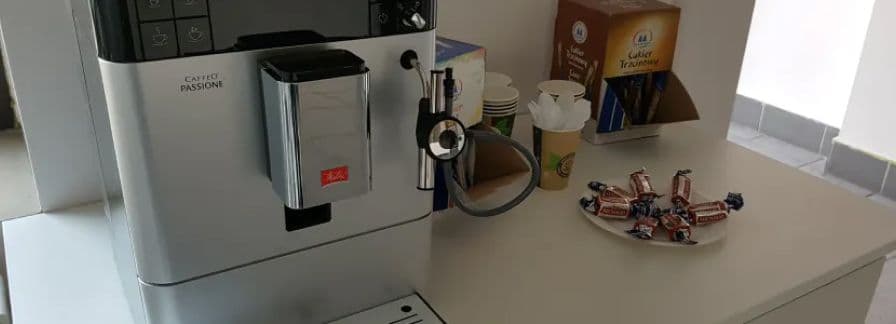
The second brand worth attention is Melitta. This manufacturer supplies automatic coffee machines built with German precision. If the advantages of Nivona machines listed above convinced you, much the same arguments could be made for Melitta's appliances.
Their distinctive design and, in selected models, compact size would tempt many people to choose them for their kitchen or office. Melitta's fully automatic machines are built around excellent brewing technology. A simple control system lets you prepare a range of drinks without having to dig into the manual. The prompts are short and clear, so that drinking coffee from a Melitta machine is a pleasure — and so is making it.
Selected models are also equipped with a pre-brewing system, which draws the maximum aroma out of the coffee. Two bean containers give you the option of brewing from two different kinds of bean. The points above are only a selection of the features and solutions used in Melitta machines that will turn your home into a small coffee house. On top of that, these machines offer the best quality-to-price ratio on the market.
As you can see, choosing a good coffee machine is not easy — but it can be a very pleasant business. As you start looking for the perfect machine for your home or office, we suggest beginning with two questions. The first is what kind of coffee you drink most often: is it a classic black coffee, or do you go for milk-based versions such as latte or cappuccino? The second important question is how the coffee is made. Consider whether there is a barista's soul in you and you want to spend time every morning celebrating the brewing of your favourite drink — or whether you are one of those people for whom the perfect taste should go hand in hand with the ease of making it.