
Flavoured coffee beans — do they damage the grinder?
Author: AMT Serwis
You fill the hopper with a new coffee and the machine suddenly refuses to cooperate: the grinder spins but will not take the beans, or it grinds and nothing reaches the cup. Before you blame the electronics, take a close look at the beans. Very often the culprit is oily coffee — flavoured, or roasted too dark.
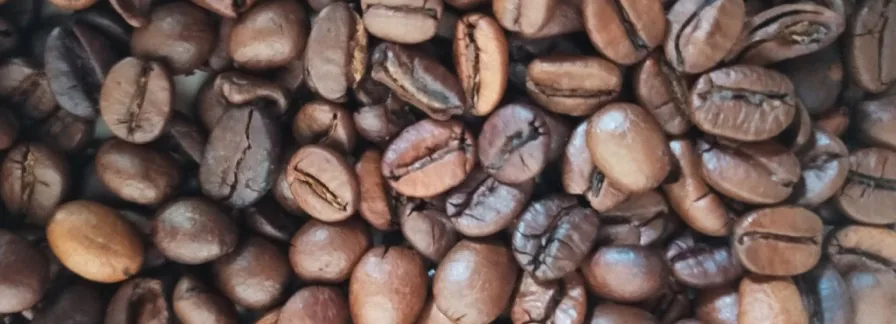
You bought a new coffee, filled the hopper, and the machine suddenly started playing up? The grinder spins but will not take the beans, the appliance makes odd noises, or it grinds the coffee and the brew never reaches the cup?
Before you decide the electronics have failed, take a close look at the beans. In our coffee machine repair workshop the culprit very often turns out to be oily coffee — which is good news, because the machine itself is frequently in perfect working order.
What "oily coffee" actually means
Every coffee bean contains natural oils — they are what gives you the aroma and the crema in the cup. The problem starts when those oils, or artificially added flavourings, end up on the surface of the bean instead of inside it. The surface turns glossy and tacky, and the bean behaves in the grinder in a way the machine's designer never planned for.
There are two routes to that state: artificial flavouring and over-roasting. Inside the grinder, the effect is the same.
Flavoured coffee — the worst enemy of automatic machines
Vanilla, chocolate, hazelnut or caramel coffee is made by coating roasted beans with oily flavouring syrups. In the grinder, that sticky layer acts exactly like glue:
- it coats the burrs, so they lose their grip on the next beans,
- it blocks the chute that carries the ground coffee to the brewing chamber,
- it clogs the internal screens of the brew unit.
That is why faults linked to flavoured coffee can appear before you finish the first bag. It is also worth knowing that many manufacturers exclude the consequences of using flavoured coffee from the warranty — they know this problem very well.
Very dark roasts — the grinder slips on them
The second risk group is very dark roasted beans, easy to recognise by their intense shine. A long roast pushes the natural oils from inside the bean out onto its surface, which makes it slippery.
The grinder can then slide over the beans instead of gripping and milling them. The machine's control board reads that state in only one way: no coffee in the hopper — even though the hopper is full. You get a "fill beans" message and start hunting for a faulty sensor that does not exist.
If you would rather choose the right beans up front, we cover that in our guide to the best coffee beans for an espresso machine.
What happens inside the machine
Once oily residue has coated the grinder, the ground coffee stops looking like a fluffy powder — the texture is closer to sticky modelling clay. That mass clogs the fine holes in the brew unit, and the pump cannot push water through the barrier.
The machine labours through the whole cycle, then drops a dry or barely damp puck into the grounds container while not a drop leaves the spout. In extreme cases it leads to an overload and a burnt out grinder motor — and that is a repair with a component replacement, not a cleaning job.
Symptoms that point to oily coffee
If any of these appear after a change of beans, start with the coffee rather than with an electronics diagnosis:
- the grinder spins but will not take the beans, even though the hopper is full;
- the machine reports no coffee straight after you have topped it up;
- grinding is louder than usual, or the sound is irregular (more on that in our article on a noisy coffee machine);
- the machine runs a full cycle but the cup stays empty, or you get a few drops;
- the grounds are dry and crumbly instead of forming a solid puck;
- the brew is noticeably weaker and the stream thin — a symptom covered in why your machine pours too little coffee.
If the symptoms appeared without any change of coffee, the cause lies elsewhere — we have gathered the possibilities in our article on a coffee grinder failure.
How to choose beans that will not harm your machine
The rule is simple: choose matt beans, light or medium roasted. Before you tip the coffee into the hopper, rub a few beans between your fingers — if they leave an oily trace and glisten, your grinder will feel it too.
A few pointers for the shop:
- read the roast description — "medium", "light", "for automatic machines" is the safe choice;
- avoid flavour claims on bags of beans: vanilla, caramel, chocolate, hazelnut;
- check the roast date — fresh coffee is simply better, while old beans dry out and produce more dust;
- buy smaller bags and store them sealed, away from light and moisture.
Do you love flavoured coffee? You do not have to give it up. Buy plain, classic coffee beans and add your favourite syrup or spices straight into the cup — never into the machine. The taste is identical and the grinder stays clean.
What not to do once the grinder has jammed
The most common reflex is to reach for a knife or a screwdriver and dig the beans out of the grinder. That is a bad idea: it is easy to chip the burrs, shift the grind adjustment or damage a sensor, turning a small problem into an expensive repair. Do not tip pre-ground coffee into the hopper to "push it through" either — it takes the same route and makes matters worse.
What you can safely do:
- Unplug the machine and empty the bean hopper.
- Vacuum the hopper and wipe it dry — moisture in a grinder is worse than residue.
- Try grinder cleaning granules, following the manufacturer's instructions.
- While you are at it, run a full clean of the automatic machine, the brew unit included.
If none of that helps, the residue has worked its way deeper and the grinder has to come apart.
When to bring the machine to a workshop
Has the grinder jammed on oily beans, does it spin without result, or does the machine report an error despite a full hopper? Bring it to us — we strip the grinder down, clean the sticky residue off the burrs and check the brew unit, so the brew comes back to full strength.
We are based in Wrocław at ul. Pułaskiego 42F, and we accept appliances from outside Wrocław by courier or parcel locker. Book a repair online and we will diagnose the fault and give you the cost before we do anything. The quote is free.
Summary
A machine that has stopped grinding, or stopped pouring, right after a change of beans is usually not broken — it is gummed up. Flavoured coffees and very dark roasts leave a sticky residue in the grinder and the brew unit that blocks both grinding and water flow, and over time can overload the grinder motor.
Choose matt beans, light or medium roasted, and add the flavour to the cup rather than to the machine. And if the residue has already done its damage — get in touch and we will bring the machine back to full working order.